
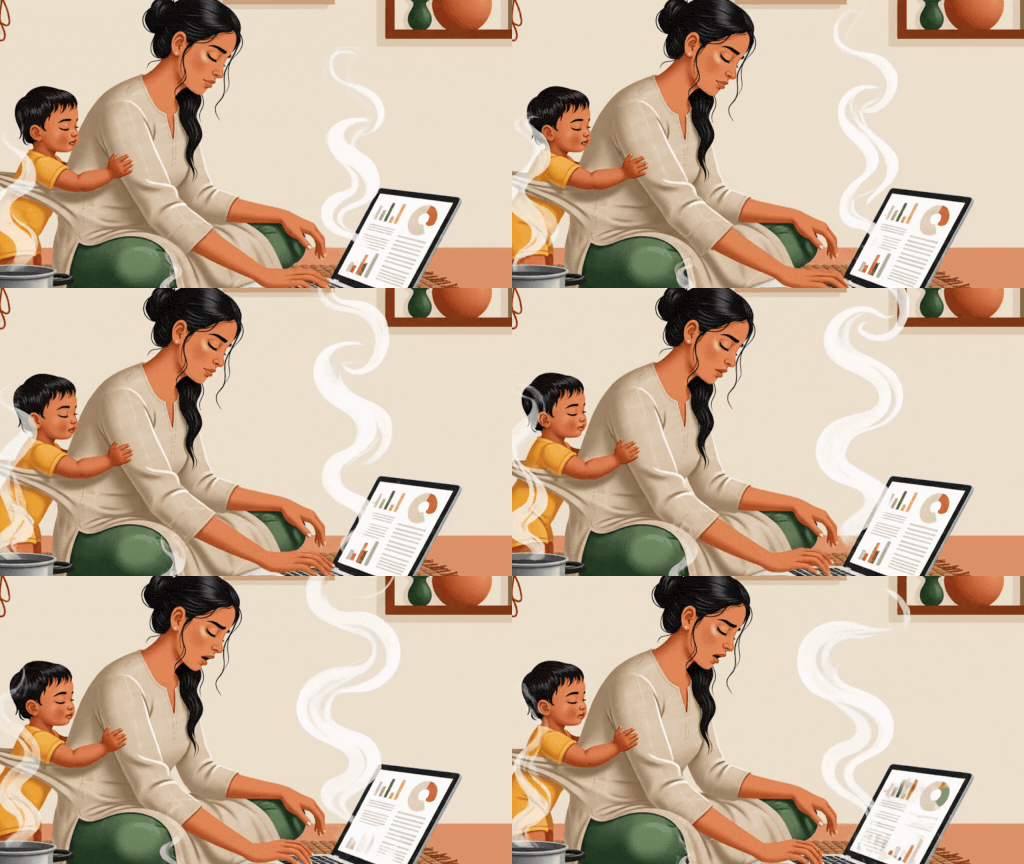
The Hidden Struggle of Independent Indian Women
While modern Indian women are often celebrated for their independence and achievements, there lies beneath this celebration a complex reality that rarely surfaces in public discourse. The journey of independence, which once promised freedom and self-fulfillment, has become a double-edged sword for many women across the country.
The Evolution of Female Independence
Indian society has witnessed a remarkable transformation in recent decades. Women today are entering professional spaces in unprecedented numbers, breaking barriers that seemed insurmountable just a generation ago. However, this independence has come with unexpected challenges that the younger generation is learning to navigate through observation and experience.
What was once considered liberating has now become a source of constant negotiation and performance. The expectation to maintain visible strength while managing multiple responsibilities has created a silent burden that many women carry daily. This pressure manifests in various aspects of their lives, from career advancement to personal relationships.
The Weight of Early Responsibility
One of the most significant challenges is the expectation that independence must be achieved early in life. Today’s young women are often thrust into roles requiring maturity and decision-making capabilities that traditionally develop over time. This premature expectation of self-sufficiency creates a unique form of stress that previous generations did not experience to the same extent.
The learning curve has become steeper as women observe the sacrifices made by those who came before them. These observations serve as both inspiration and warning, creating a complex emotional landscape where ambition is tempered by awareness of potential costs.
Societal Expectations and Personal Sacrifice
Indian society maintains certain expectations of independent women that often contradict the very essence of freedom. There’s an unspoken pressure to excel professionally while maintaining traditional roles within the family. This creates a balancing act that requires constant energy and resilience.
The criticism faced by independent women adds another layer to their challenges. Whether in professional settings or social circles, women who assert their independence often encounter skepticism and resistance. This societal pushback forces many to constantly justify their choices and prove their capabilities.
The Performance of Strength
Modern independent women have mastered the art of presenting strength and confidence, even when facing internal doubts and exhaustion. This performance becomes necessary in environments where vulnerability is often misconstrued as weakness. The mental energy required to maintain this facade contributes significantly to the unseen burden they carry.
This constant performance creates a disconnect between public perception and private reality. While colleagues, friends, and family may see only the accomplished, confident exterior, the woman herself may be navigating a complex internal landscape of self-doubt and exhaustion.
Generational Wisdom and Changing Perspectives
As younger generations of women navigate independence, they are drawing wisdom from both the successes and failures of those who came before them. This intergenerational learning is gradually shifting societal attitudes and creating new definitions of what independence truly means.
The conversation is evolving beyond simply celebrating independence to examining its complexities. There’s growing recognition that true independence includes the freedom to be vulnerable, to ask for help, and to define success on one’s own terms rather than meeting external expectations.
Pathways to Sustainable Independence
The future of women’s independence in India lies in creating systems and mindsets that support holistic well-being. This includes workplace policies that acknowledge multiple responsibilities, social structures that value diverse expressions of strength, and personal approaches that prioritize sustainable success over burnout-inducing achievement.
As society continues to evolve, there’s hope that the conversation around women’s independence will become more nuanced and supportive. The recognition that independence should enhance life quality rather than diminish it represents an important step toward creating more equitable and fulfilling experiences for women across India.
Conclusion
The story of independent Indian women is one of triumph tempered by challenge. While the celebration of their achievements is warranted, it’s equally important to acknowledge the invisible burdens they carry. By understanding these complexities, we can work toward creating a society where independence truly means freedom in all its dimensions—freedom to succeed, freedom to be human, and freedom to thrive without compromise.
The journey toward meaningful independence continues, with each generation building upon the wisdom of those who came before. As this evolution progresses, the hope is that the unseen burdens will become lighter, replaced by systems and mindsets that truly support and celebrate the multifaceted nature of women’s independence in modern India.
