
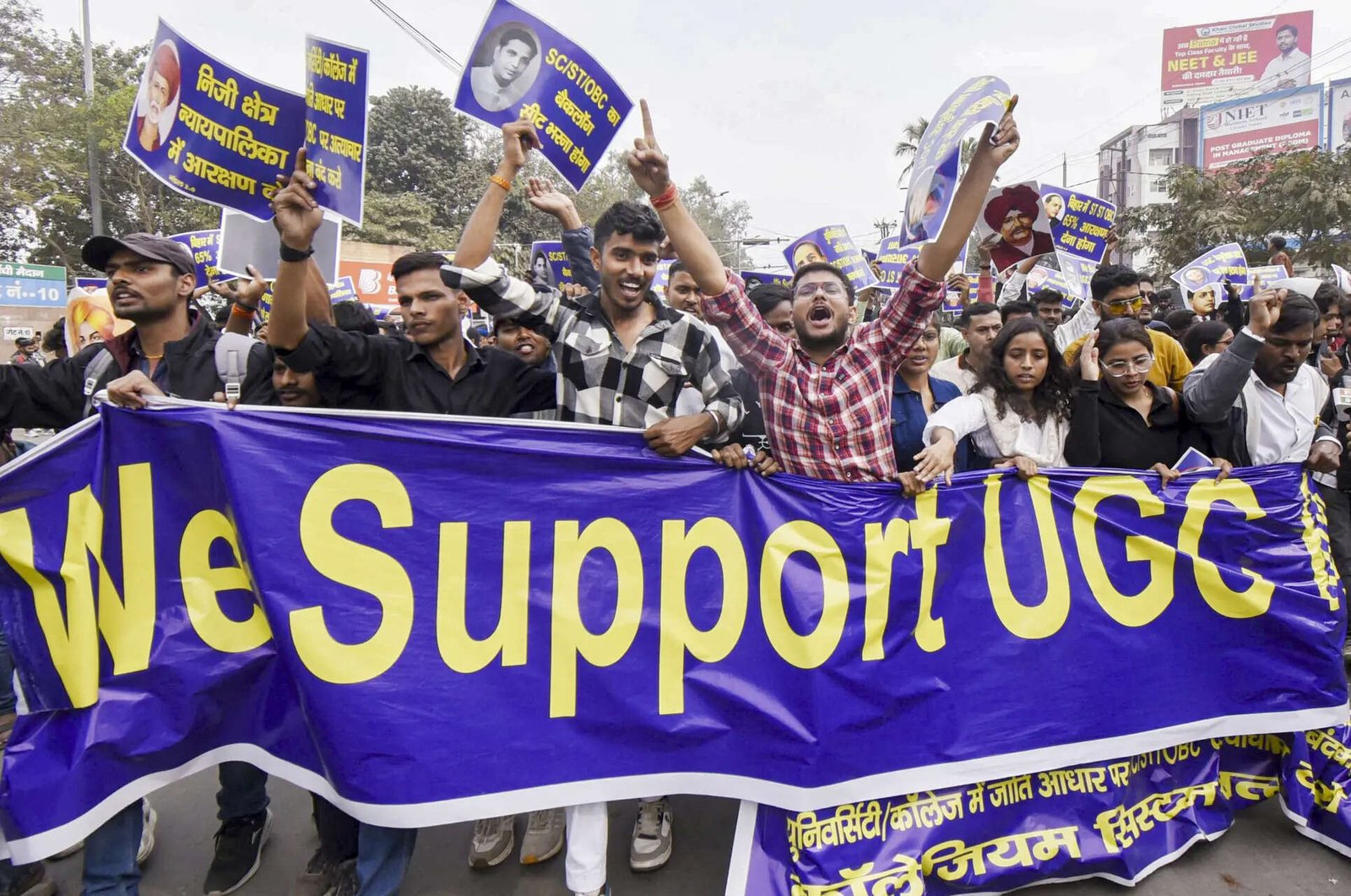
Delhi University Protests Over UGC Equity Regulations
Students at Delhi University have taken to the streets in a significant display of activism, organizing an “Equity March” across North Campus to protest against a judicial stay on the UGC Equity Regulations 2026. The demonstration, which saw hundreds of participants, reflects growing concerns about the stalled implementation of safeguards designed to address caste-based discrimination within higher education institutions.
Background of the Controversy
The UGC Equity Regulations, formulated to establish comprehensive measures against discrimination and ensure equitable opportunities for all students, have become a focal point of contention. The recent judicial intervention has effectively paused these regulations, leaving many students and educational advocates questioning the future of anti-discrimination policies in Indian universities.
The regulations were developed with the intention of creating a more inclusive academic environment, addressing systemic barriers that students from marginalized communities often face. Their implementation was seen as a significant step forward in educational equity and social justice within the university system.
Student Activism and Demands
Under the banner of the Equity March, students have voiced their strong opposition to the judicial stay. Organizers emphasize that the pause in regulatory implementation undermines crucial protections against caste-based discrimination, potentially leaving vulnerable students without the necessary safeguards.
Key Objectives of the Protest Movement
The movement encompasses several core demands that reflect both immediate and long-term goals. Central to these is the call for the immediate implementation of the UGC Equity Regulations 2026, which protesters argue are essential for maintaining a fair and inclusive educational environment.
Beyond the immediate regulatory concerns, students are also advocating for the establishment of legal backing through what they refer to as the “Rohith Act.” This proposed legislation aims to provide stronger legal foundations for anti-discrimination measures and ensure their consistent application across educational institutions.
Broader Implications
The protests at Delhi University highlight broader discussions about the role of regulatory frameworks in addressing social inequalities within educational settings. The intersection of legal, educational, and social justice issues has created a complex landscape where policy decisions have far-reaching consequences for student welfare and institutional equity.
University administrators and educational policymakers now face the challenge of balancing legal considerations with the expressed needs of student communities. The outcome of this situation may set precedents for how similar regulatory issues are handled in other educational institutions across the country.
Looking Forward
As the situation continues to develop, all eyes remain on Delhi University as a case study in the ongoing struggle for educational equity. The student protests demonstrate a growing awareness and willingness to advocate for systemic change, while the legal and regulatory processes continue to unfold.
The coming weeks will likely see continued dialogue between student representatives, university officials, and legal authorities. Whether the current momentum translates into concrete policy changes remains to be seen, but the Equity March has undoubtedly elevated important conversations about discrimination, inclusion, and the future of higher education in India.
