
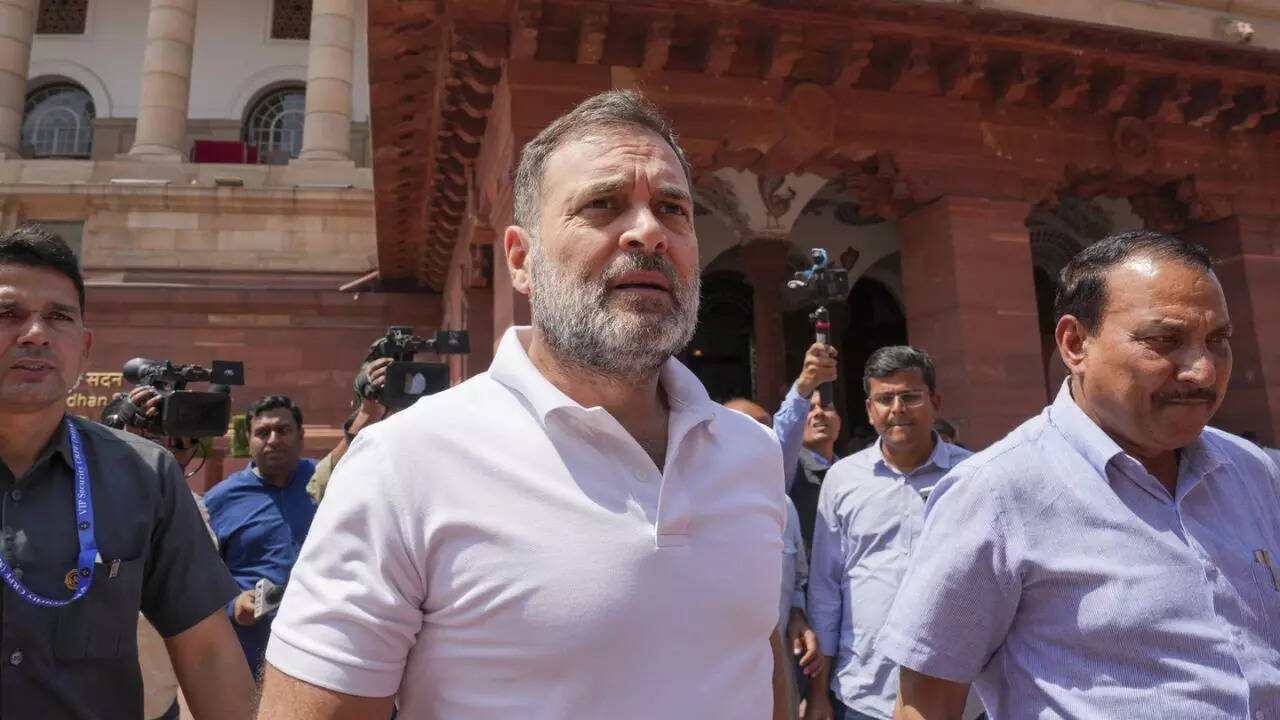
Rahul Gandhi Appears Before Sultanpur Court in Defamation Case
Former Indian National Congress president Rahul Gandhi presented himself before a court in Sultanpur on Friday to record his statement in connection with a criminal defamation case dating back to 2018. The case stems from remarks allegedly made about Union Home Minister Amit Shah during the Karnataka Assembly elections.
Background of the Legal Proceedings
The defamation case was initiated by a Bharatiya Janata Party (BJP) leader following comments attributed to Rahul Gandhi during the Karnataka Assembly elections campaign. According to the complaint, Gandhi had referred to Shah as an “accused in a murder case,” which formed the basis of the legal action. The case has been ongoing for several years, with various court hearings and procedural formalities being completed.
Court Appearance Details
Gandhi’s appearance before the Sultanpur court was part of the ongoing legal process in the defamation matter. The Congress leader recorded his statement before the court, maintaining his position that the remarks were politically motivated and made in the context of electoral politics. The court proceedings were conducted in a routine manner, with Gandhi complying with all legal requirements.
Legal Context and Political Implications
Defamation cases involving prominent political figures are not uncommon in Indian politics, often reflecting the intense competition and heated exchanges between rival parties. The case against Gandhi represents one such instance where political speech has crossed into legal territory. Both the Congress and BJP have engaged in numerous verbal spats during election campaigns, with some of these exchanges resulting in legal action.
Gandhi’s Defense Position
Throughout the legal proceedings, Rahul Gandhi has maintained that the statements were made in the context of political discourse and were not intended to defame Amit Shah personally. His legal team has consistently argued that the case represents an attempt to silence political criticism through legal means. The Congress leader has characterized the defamation case as politically motivated, suggesting it is part of a broader pattern of using legal mechanisms to target opposition leaders.
Political Significance of the Case
The case holds significance beyond its legal parameters, as it involves two prominent figures from opposing political camps. Rahul Gandhi, as a key leader of the opposition, and Amit Shah, as a senior Cabinet minister, represent the ideological divide between the Congress and BJP parties. The outcome of this defamation case could potentially influence the nature of political discourse and the boundaries of free speech in Indian electoral politics.
Broader Legal Landscape
The legal landscape surrounding defamation in India has been evolving, with courts often balancing the right to free speech against the protection of individual reputation. Political figures frequently find themselves at the center of such cases, as their public statements carry significant weight and impact. The courts have been tasked with determining where political criticism ends and defamation begins, a delicate balance that requires careful consideration of constitutional rights and social harmony.
Future Proceedings and Expected Developments
Following Gandhi’s court appearance, legal experts anticipate that the case will proceed through its remaining stages, including potential cross-examinations and final arguments. Both sides are expected to present their respective positions comprehensively, with the court ultimately deciding on the merits of the case. The timeline for the conclusion of these proceedings remains uncertain, given the complexity of legal processes and the potential for appeals.
Impact on Political Discourse
Regardless of the case’s outcome, it has already contributed to the ongoing debate about the boundaries of political speech and the appropriate legal responses to controversial statements. Legal scholars and political commentators will be closely monitoring how courts handle such cases involving high-profile political figures, as the precedents set could influence future interactions between political opponents and shape the nature of electoral campaigns.
The defamation case involving Rahul Gandhi represents an intersection of legal proceedings and political dynamics, highlighting the challenges of maintaining both legal accountability and robust political discourse in a democratic society. As the case progresses, it will continue to be a subject of interest for legal observers, political analysts, and the general public alike.
