
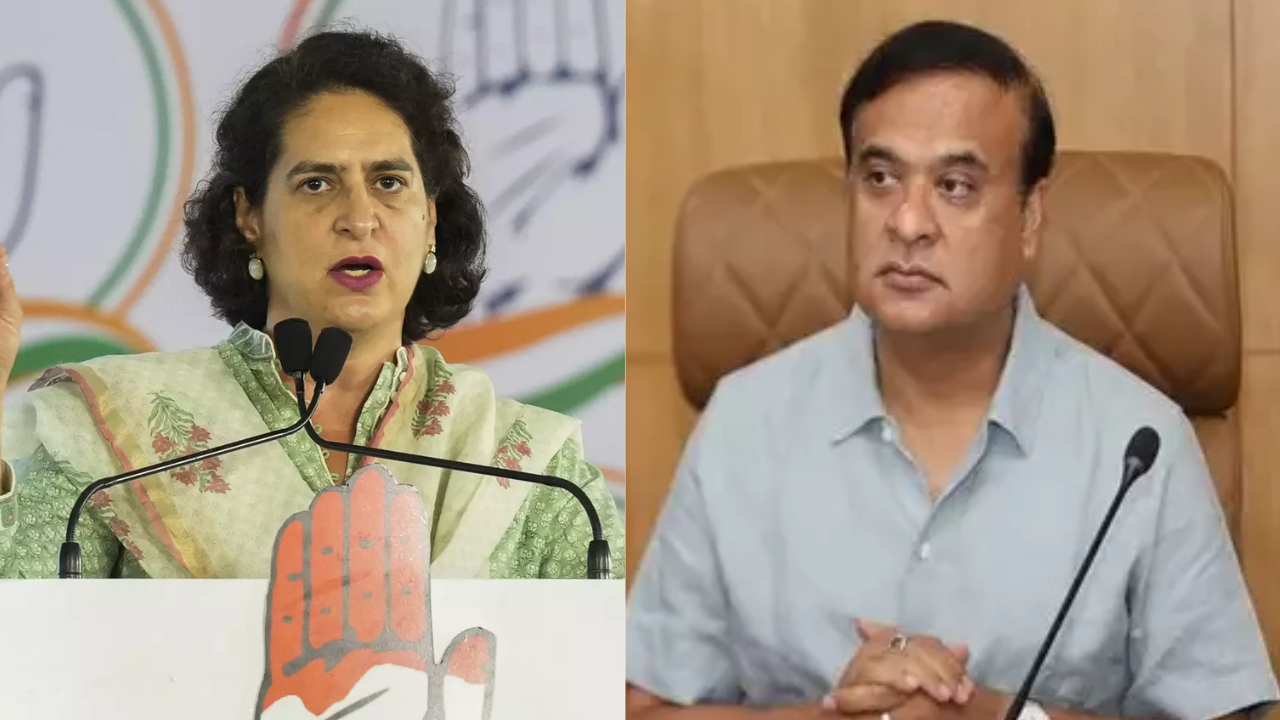
Priyanka Gandhi Criticizes Assam CM Over Political Remarks
In a recent development that has drawn significant attention in Indian political circles, Congress leader Priyanka Gandhi Vadra has spoken out against Assam Chief Minister Himanta Biswa Sarma. The criticism centers on remarks made by the CM concerning MP Gaurav Gogoi and his family, with Gandhi Vadra characterizing the comments as a form of “politics of polarization.”
Political Tensions Escalate in Assam
The exchange between prominent political figures highlights the ongoing tensions between ruling party members and opposition representatives in Assam. According to Gandhi Vadra, the Chief Minister’s recent statements appear to be a response to Gaurav Gogoi’s approach to politics, which she describes as embodying “politics of love” and following “the right path.”
This political discourse comes at a time when Assam remains a significant state in India’s political landscape, with both national parties closely monitoring developments. The Congress leader suggested that Sarma’s targeting of Gogoi and his family stems from the MP’s consistent advocacy for certain political principles.
“Politics of Polarization” Allegations
Gandhi Vadra specifically accused the Assam CM of resorting to personal attacks rather than engaging in substantive policy discussions. She indicated that such tactics reflect a broader pattern of “politics of polarization” that seeks to divide rather than unite communities.
The criticism raises questions about the nature of political discourse in contemporary India, where personal attacks and targeted criticism have become increasingly common. Political analysts note that such exchanges often overshadow substantive policy debates and public issues that directly impact citizens.
Broader Political Implications
The interaction between these political figures may have implications beyond Assam, potentially influencing national political narratives. The Congress party has been positioning itself as an alternative to the ruling BJP in various states, and such exchanges contribute to the ongoing political positioning.
As political observers continue to analyze these developments, attention remains focused on how such exchanges might affect voter perceptions and electoral outcomes in the region. The debate also highlights the challenges of maintaining constructive political discourse in an increasingly polarized environment.
Both the Congress party and the BJP have been active in Assam, with various initiatives and campaigns aimed at gaining voter support. The recent exchange between Gandhi Vadra and Sarma adds another layer to the complex political landscape of the northeastern state.
Political experts suggest that maintaining a focus on development and good governance remains crucial for all parties, regardless of the nature of political exchanges. As the political season continues, voters will be watching closely to see which party can deliver on its promises and address the genuine concerns of the people.
The controversy surrounding these remarks underscores the importance of respectful political debate and the need for constructive criticism that focuses on policy rather than personal attacks. As Assam continues to develop politically, the quality of political discourse will likely play a significant role in shaping the state’s future trajectory.
