
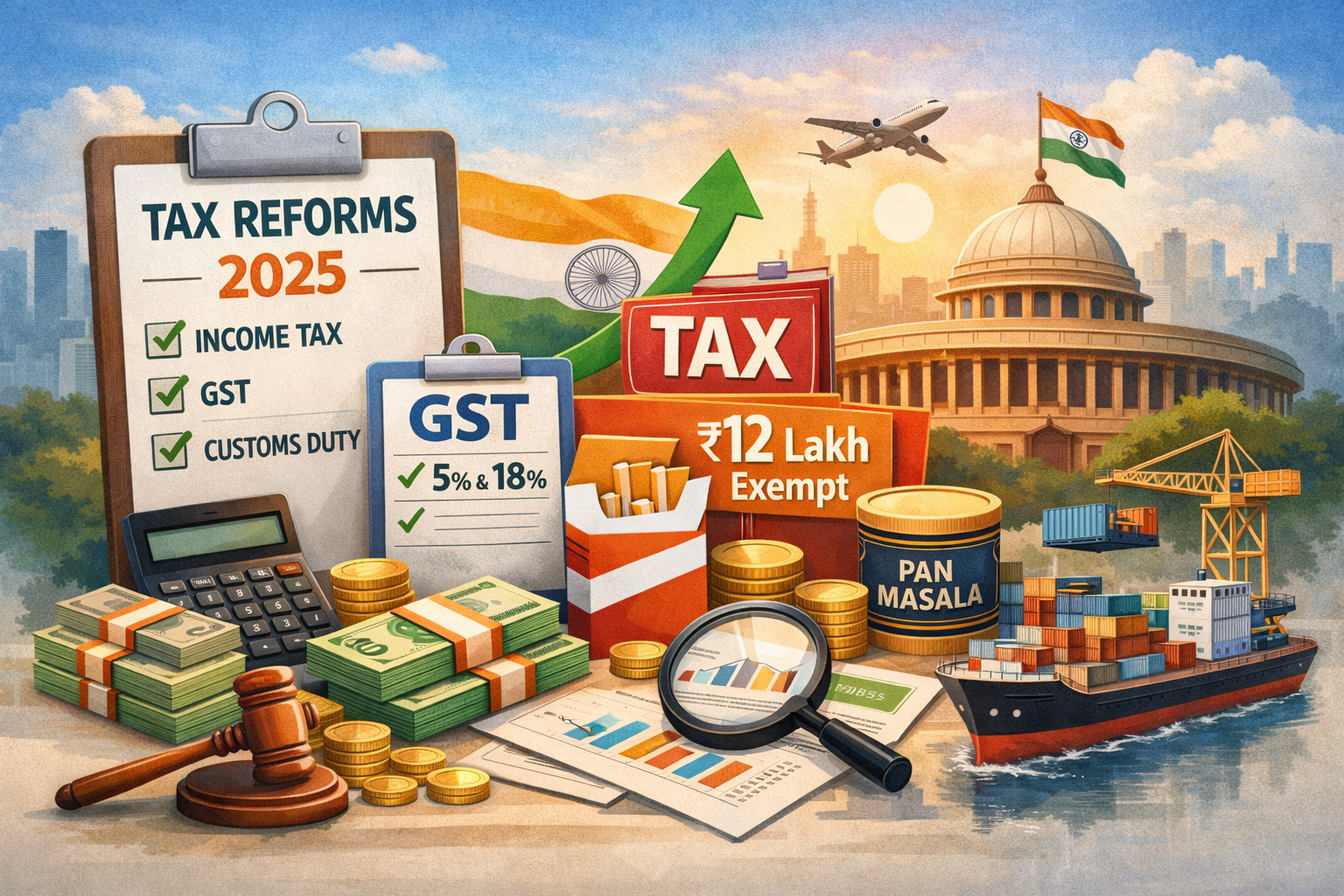
India’s tax system is entering a new phase in 2025 with wide-ranging reforms in income tax, GST, and customs duties. These changes are designed to simplify tax compliance, increase disposable income, and strengthen economic growth amid global uncertainty.
This article explains the latest India tax reforms 2025 in simple language, making it useful for taxpayers, businesses, and investors.
New Income Tax Act, 2025 Comes Into Effect
From April 1, the government will implement the Income Tax Act, 2025, replacing the Income Tax Act of 1961. The new law focuses on clarity, transparency, and ease of understanding, helping taxpayers comply without confusion.
Key objectives include:
- Simplified tax structure
- Reduced legal disputes
- Improved voluntary compliance
This reform is expected to improve the overall income tax filing experience in India.
New Taxes on Cigarettes and Pan Masala
The government has proposed:
- An additional excise duty on cigarettes
- A special cess on pan masala over and above GST
These measures aim to increase revenue from sin goods while keeping essential items affordable.
Why These Tax Reforms Were Introduced
The 2025 tax reforms were introduced to support the Indian economy during a challenging global environment. Trade uncertainties and slowing global demand prompted the government to focus on boosting domestic consumption.
By lowering tax burdens and simplifying rules, the reforms aim to:
- Increase household spending
- Support small businesses
- Strengthen economic stability
GST Rate Cuts and Simplification
GST Rates Reduced on 375 Items
A major highlight was the GST rate cut on around 375 goods and services, effective September 22. This move helped lower prices of daily-use items and addressed long-standing inverted duty issues.
GST Slabs Reduced to Two Main Rates
The earlier four GST slabs — 5%, 12%, 18%, and 28% — are being streamlined into two primary slabs:
- 5% GST
- 18% GST
A higher 40% GST rate continues only for sin goods such as tobacco and luxury products. This change makes the GST structure in India simpler and more predictable.
GST Collection Trends After Rate Cuts
GST collections touched a record ₹2.37 lakh crore in April, with average monthly collections of about ₹1.9 lakh crore during the current financial year.
However, after the rate cuts:
- November GST collections fell to ₹1.70 lakh crore
- Growth slowed to 0.7% year-on-year
This reflects the short-term revenue impact of GST rationalisation.
Big Income Tax Relief for Middle-Class Taxpayers
No Income Tax Up to ₹12 Lakh
Under the new income tax regime 2025, individuals earning up to ₹12 lakh per year are not required to pay income tax. This provides significant middle-class tax relief and boosts consumer spending.
New Income Tax Slabs (2025)
- 5% on income between ₹4–8 lakh
- 10% on income between ₹8–12 lakh
- 15% on income between ₹12–16 lakh
- 20% on income between ₹16–20 lakh
- 25% on income between ₹20–24 lakh
- 30% on income above ₹24 lakh
The new regime offers lower tax rates but does not allow deductions or exemptions.
Impact on Direct Tax Collections
The tax cuts resulted in moderate revenue growth:
- Non-corporate income tax collections grew 6.37% to ₹8.47 lakh crore
- Corporate tax collections grew 10.54% to ₹8.17 lakh crore
Income Tax Refunds Decline
Income tax refunds declined 14% year-on-year to around ₹2.97 lakh crore, as authorities increased checks on high-value refund claims.
Customs Duty Reform: The Next Big Step
With GST and income tax reforms largely in place, the government is now focusing on customs duty rationalisation.
Key goals include:
- Simplified customs duty rates
- End-to-end digital customs processes
- Faster, risk-based clearances
In the 2025–26 Budget, seven additional customs tariff rates on industrial goods were removed, reducing the total number of slabs to eight.
Expert Suggestions on Future Reforms
Experts recommend:
- Complete digitalisation of customs procedures
- Uniform documentation standards
- Predictable product classification
- A one-time amnesty scheme for legacy customs disputes
These steps could reduce litigation and improve ease of doing business in India.
Conclusion
India’s tax reforms in 2025 signal a shift toward a simpler, transparent, and growth-oriented tax system. With income tax relief for individuals, GST simplification, and upcoming customs reforms, the focus remains on economic growth, compliance, and investor confidence.